Play Is Research
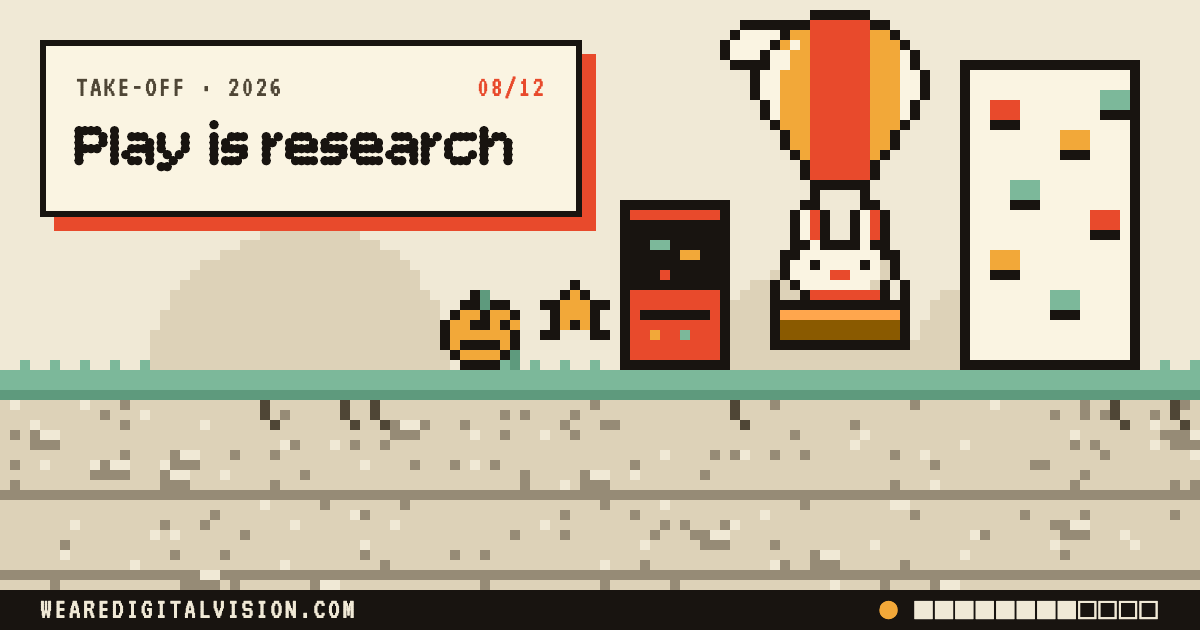
Some of my favourite work this year had no business case at all. It was play. And almost every time, play taught me something the serious work then used.
What came out
- Flashed It, a bouldering game for your phone, made with my son so he could see how a product gets made, from the first idea to its own logo.
- Treat Back, a Halloween prank for trick-or-treaters. The child picks a creature and holds out their phone, the host taps, and it screams. The host rates the scare on a jump-scare-o-meter.
- An arcade game on our own business website. On purpose.
- A snow globe you shake on your phone to reveal a discount code, still a prototype.
- A Roblox game about catching storm clouds, only just started.
Why it lifted off
Play has no client waiting, so you try the strange idea first. The climbing game is the best example. It began as a lesson for my son. It became the clearest showcase I have of what can be built on Base44, and then a branded edition for a real climbing gym. None of that was planned.
Play also keeps you honest about feel. A game is either fun in the first ten seconds or it isn't. That's the same test as the first frame of an app (post 2), and I learned it faster from a game.
What I learned
If you're stuck on serious work, build something silly with the same tools. You'll learn the tools faster, and you'll remember why you liked making things.
Where it sits now
The climbing game is live. The Halloween prank is waiting for next October. The rest are on the bench, waiting for the right season.